Reusable shipping crates are designed to protect valuable items through more than one trip. Unlike a one-time crate built for a single shipment, a reusable crate must hold up through repeated loading, unloading, storage, handling, and transport. For businesses that ship the same equipment, products, trade show materials, or machinery more than once, the right reusable crate can improve consistency, reduce damage risk, and make future shipments easier to manage.
A reusable crate is not simply a stronger wooden box. It is a packaging system designed around the item, the shipping environment, and the number of times the crate is expected to be used.
What Makes a Shipping Crate Reusable?
A crate is reusable when it is built with durable materials, reinforced construction, and features that allow it to be opened, closed, handled, and repacked multiple times without losing its protective value. The crate should continue to fit the item properly after repeated use and should be easy for shipping teams to inspect, load, secure, and reseal.
Reusable crates are often used for trade show displays, electronics, medical equipment, industrial components, tools, demo units, and other assets that move regularly between facilities, customers, events, or storage locations.
Strong Materials and Reinforced Construction
The first feature of a reusable crate is durable construction. The lumber, panels, fasteners, and framing need to be strong enough to withstand repeated handling. A crate that will be moved by forklift, pallet jack, truck, air freight, or ocean freight may face vibration, stacking pressure, side impact, and changing environmental conditions.
Reinforced corners, secure bases, and properly designed panels help the crate keep its shape over time. This matters because even small shifts in the crate structure can reduce protection during future shipments.
Reusable Hardware for Easy Opening and Closing
A reusable crate should be easy to open without destroying the crate itself. Instead of relying only on nails or one-time fasteners, reusable crates may include screws, latches, hinges, removable panels, or access doors. These features make it easier to unpack and repack the item without damaging the crate.
Good hardware also helps reduce labor time. If a team needs to ship the same item repeatedly, a crate that opens cleanly and closes securely can make each shipment more efficient.
Custom Interior Protection
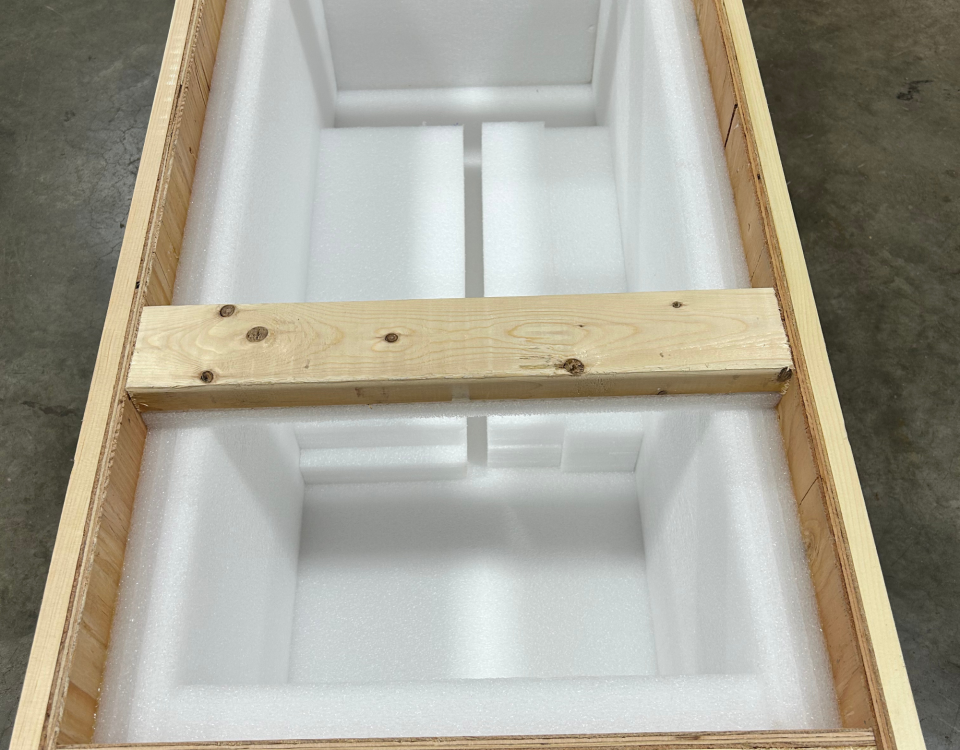
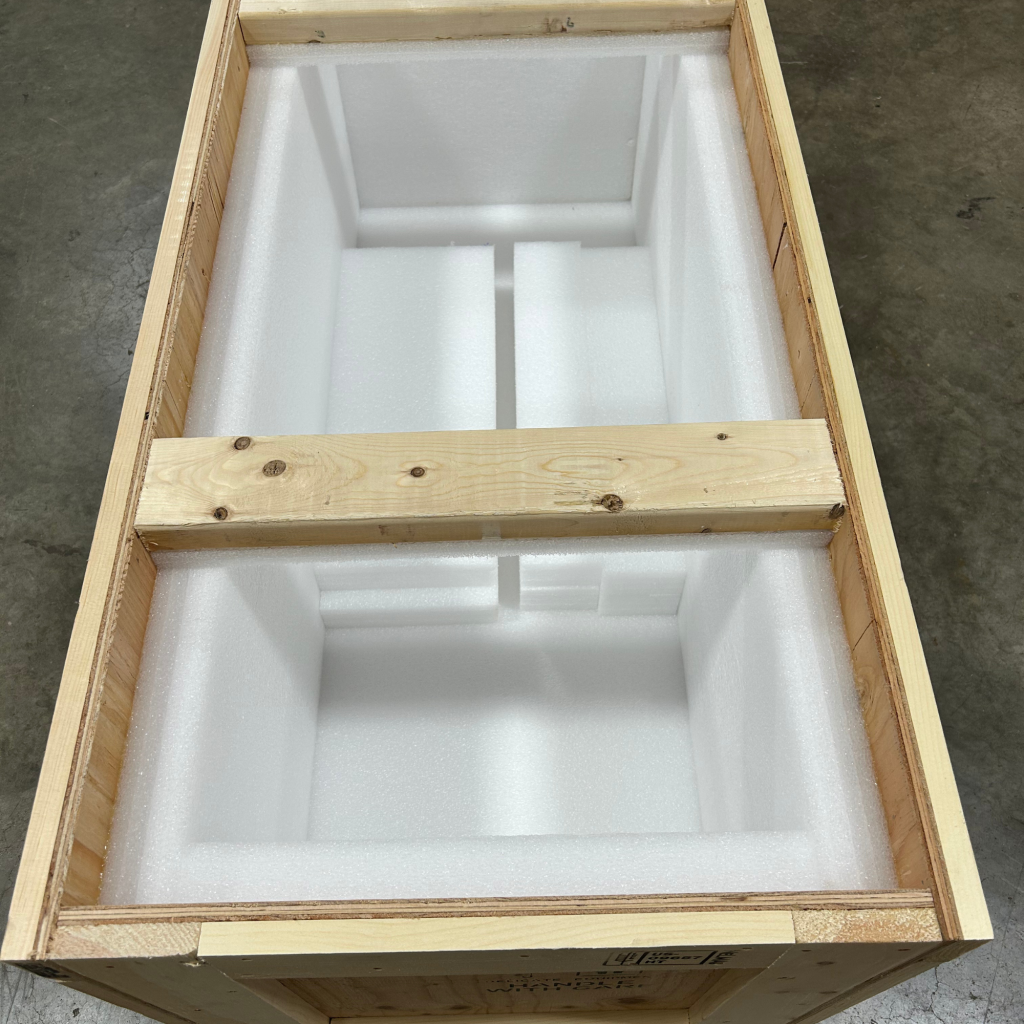
The inside of the crate is just as important as the outside. Reusable crates often include custom foam, blocking, bracing, cushioning, or fitted supports that hold the item in place. These interior features help prevent shifting, scraping, vibration damage, and impact during transit.
For sensitive equipment, the interior design may need to account for fragile edges, uneven weight distribution, delicate components, or specific lift points. A reusable crate should make it clear where the item belongs each time it is packed.
Built-In Handling Features
Reusable crates should be designed for real-world handling. Forklift access, skid bases, handles, casters, ramps, tie-down points, and clear labeling can all make a crate easier and safer to move.
These features are especially important for heavy machinery, trade show crates, and equipment that may be handled by different teams at different locations. The easier the crate is to move correctly, the lower the risk of preventable damage.
Clear Labels and Repeatable Packing Instructions
A reusable crate should support a repeatable process. Labels, markings, orientation indicators, and packing instructions help each team understand how the crate should be loaded, closed, stored, and shipped.
This is valuable when the crate will be used by employees, freight handlers, event teams, or warehouse staff who may not have been involved in the original crating project.
When Is a Reusable Crate Worth It?
A reusable crate is usually worth considering when the same item will be shipped multiple times, the shipment is high value, the item is difficult to replace, or consistent protection is important. While reusable crates may cost more upfront than a one-time crate, they can provide long-term value by reducing repeat packaging needs and helping protect important assets across multiple trips.
For businesses with recurring shipments, a custom reusable crate can turn a complicated shipping process into a more reliable routine.