Commercial and industrial equipment can be damaged long before it reaches its destination. Impact, vibration, moisture, inadequate support, and improper handling can affect machinery during transportation or storage.
Professional custom crating helps reduce these risks by creating a packaging solution based on the equipment’s weight, dimensions, sensitivity, destination, and shipping method.
Equipment may experience continuous vibration during truck, rail, air, or ocean transportation. Sudden impacts can also occur while machinery is being loaded, transferred, or unloaded. These forces may loosen connections, damage sensitive components, or affect calibrated equipment.
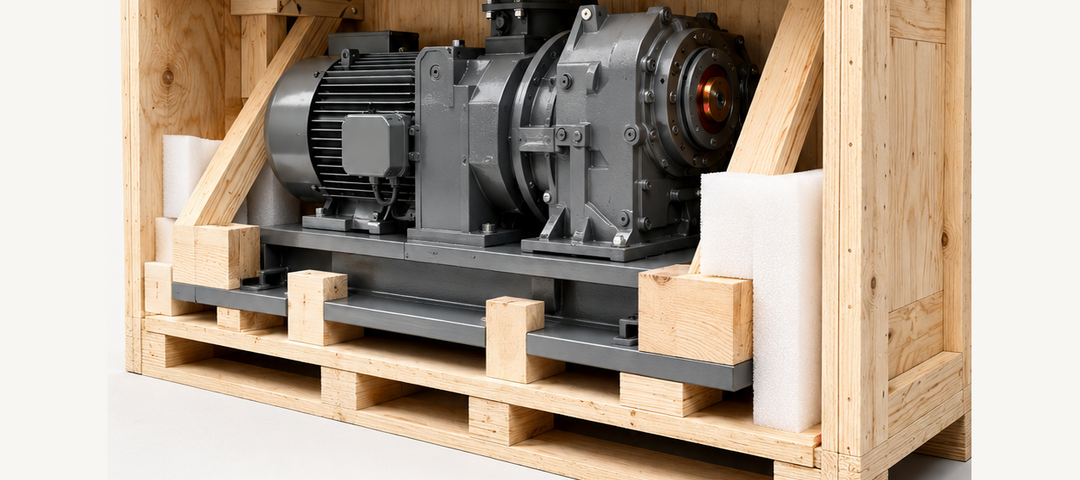
A professional crating team can use cushioning, foam padding, blocking, and bracing to help control movement and absorb shock.
Placing equipment inside a wooden crate does not automatically make it secure. Equipment that can shift, slide, or tip may strike the crate or become unstable during handling.
Blocking and bracing hold equipment in position and help distribute transportation forces. Heavy or irregularly shaped machinery may require a reinforced base and supports designed around its weight and center of gravity. Crate This provides specialized heavy machinery crating and packaging for commercial and industrial equipment.
Humidity, condensation, rain, and temperature changes can expose metal equipment to moisture. Ocean freight and long-term storage may create additional corrosion concerns.
Depending on the shipment, protection may include barrier materials, desiccants, protective wrapping, or corrosion-control products. Crate This offers vapor barrier packaging and rust protection for machinery, electronics, and other moisture-sensitive equipment.
A crate that is too weak for its contents may flex, separate, or fail during lifting and transportation. Standard packaging may also be unsuitable for oversized, unusually shaped, or high-value equipment.
Custom crate design considers weight distribution, lifting points, handling methods, transportation conditions, and the dimensions of the equipment. This provides more appropriate protection than relying on a one-size-fits-all container.
Poorly positioned forklift entry points and unstable lifting can damage the crate and the equipment inside. Professionally designed crates may include reinforced bases, suitable forklift access, lifting provisions, and visible handling markings.
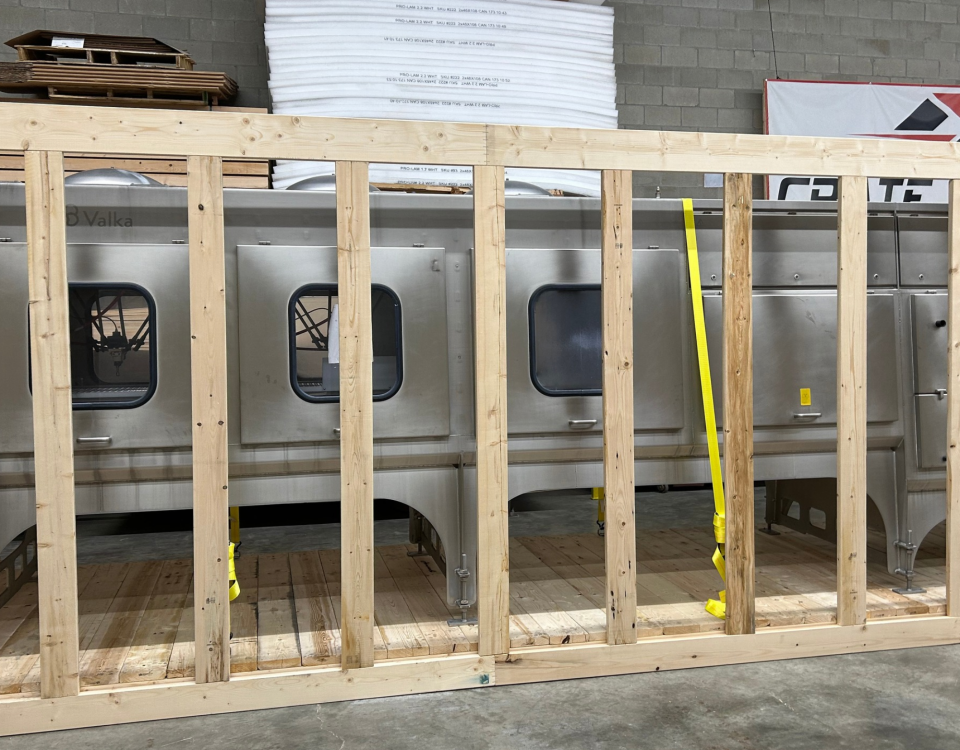
When machinery cannot be moved safely before packaging, on-site crating services allow the crating team to complete the work at the customer’s facility.
A professional crating provider may evaluate:
This assessment informs the crate design, securement methods, interior protection, and moisture-control strategy. Cargo traveling overseas may also require custom international shipping crates designed for the shipment and transportation method.
Professional crating is particularly valuable for heavy machinery, electronics, medical equipment, prototypes, trade-show displays, and other high-value assets. It may also be appropriate when equipment is oversized, difficult to replace, traveling internationally, or passing through multiple handling facilities.
The right crate cannot eliminate every transportation risk, but it can reduce avoidable movement, moisture exposure, and handling damage. Businesses preparing an upcoming shipment can request a custom crating estimate from Crate This.